


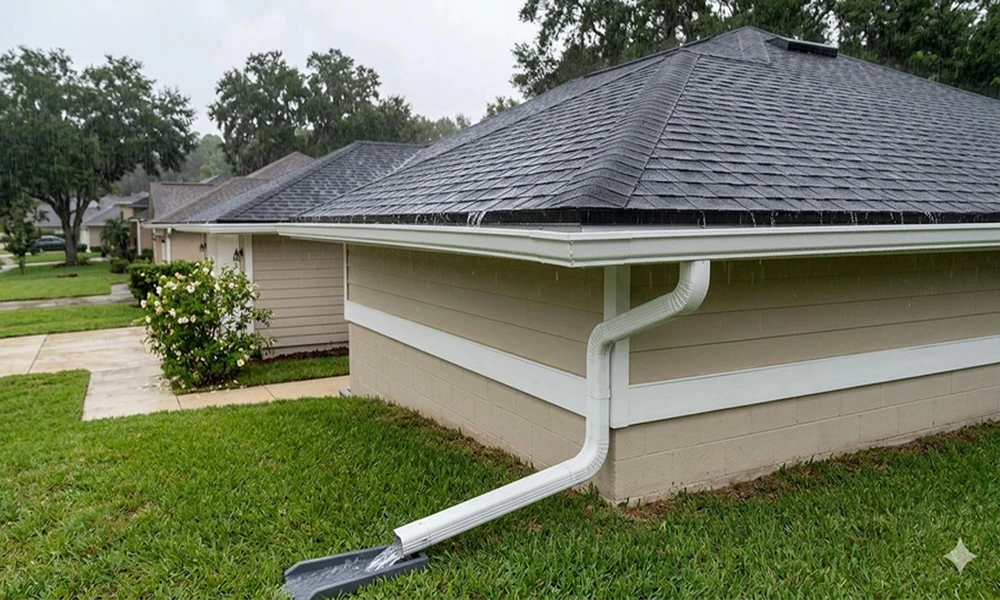
Water collecting around a house after rainfall may seem like a temporary inconvenience. However, repeated puddling near exterior walls, walkways, or foundation areas can indicate that rainwater isn’t draining as effectively as it should.
Sometimes the cause is straightforward, such as a blocked downspout. In other cases, several conditions contribute to the problem, including poor landscape grading, damaged gutters, or compacted soil.
Understanding where the water comes from and how it moves around your property is the first step toward choosing the right solution. Here are the common causes of drainage problems and practical ways to address them before they become more difficult to manage.
Why Water Collects Around Residential Foundations
Rainwater naturally follows the lowest available path. When the ground surrounding a home doesn’t direct water away from the building, runoff may collect near the foundation.
Several factors can contribute to this situation.
Improper ground slope: Soil that slopes toward the house instead of away from it can direct rainwater toward foundation walls.
Compacted soil: Densely packed ground may absorb rainfall slowly, allowing water to remain on the surface.
Low areas in the landscape: Depressions near patios, driveways, or planting beds can collect runoff during storms.
Concentrated roof runoff: Rainwater discharged from a roof without effective collection and drainage can saturate nearby soil.
These conditions can occur individually or together. For example, a properly functioning downspout may still discharge water into a low area where it cannot drain efficiently.
Before making repairs, observe where puddles develop, how long they remain, and whether they appear during light rain or only during heavier storms.
This information can help distinguish a minor maintenance issue from a broader drainage problem.
When Gutters and Downspouts Are Part of the Problem
Gutters collect rainwater flowing from the roof and direct it toward downspouts. When components are clogged, damaged, or incorrectly positioned, water may escape before reaching a suitable discharge point.
One common warning sign is water spilling over the gutter edge during rainfall.
Leaves, twigs, and accumulated debris can obstruct the channel, particularly around downspout openings. Water may then overflow onto siding, landscaping, or the soil surrounding the foundation.
However, debris isn’t always responsible.
Gutters can also develop leaks at joints, pull away from fascia boards, or sag because of loose fasteners. Poorly positioned sections may allow water to remain in the system rather than flow toward the outlets.
Downspouts deserve equal attention. Even clean gutters cannot manage roof runoff effectively if their outlets are blocked or discharge water too close to the building.
For homeowners researching local services using the search phrase gutter installation Noblesville, it helps to understand the differences between cleaning, repairing, and replacing a gutter system before deciding what work is necessary.
A cleaning may resolve an obstruction, while isolated leaks or loose fasteners may be repairable. More extensive deterioration, recurring drainage failures, or an unsuitable existing layout may justify evaluating a replacement system.
The important consideration is whether the complete gutter-and-downspout arrangement directs water away from vulnerable areas.
Practical Ways to Improve Drainage Around Your Home
Once you’ve identified the likely source of excess water, several improvements may help manage runoff more effectively.
Keep gutters clear of obstructions.
Inspect gutters periodically, especially after storms and during seasons when nearby trees shed leaves. Removing debris helps maintain an open path for rainwater.
Use appropriate safety precautions, and consider professional assistance rather than attempting unsafe ladder work.
Evaluate downspout discharge locations.
Follow the path of water leaving each downspout. If it empties directly beside the foundation, an appropriate extension or drainage connection may help redirect runoff farther away.
The correct discharge location depends on the property’s layout, ground conditions, and applicable local requirements.
Correct low spots near the house.
Small landscape depressions may be improved by adjusting the soil surface to encourage water to move away from the structure.
Avoid covering siding, foundation vents, or other building features that require clearance.
Consider drainage channels where necessary.
For areas where water repeatedly crosses walkways or collects near paved surfaces, a properly designed surface drain may help intercept runoff.
More complicated situations may require underground drainage, grading improvements, or an assessment of broader site conditions.
Check for contributing problems.
A drainage issue might involve several systems simultaneously. For example, extending a downspout may provide limited improvement when the surrounding landscape still slopes toward the home.
Addressing the underlying cause is generally more effective than treating each puddle separately.
How to Recognize Drainage Problems That Need Professional Attention
Not every puddle indicates a serious structural issue. However, recurring moisture problems deserve closer investigation.
Pay attention to water that consistently collects against foundation walls, especially when it remains long after rainfall ends.
Other warning signs include damp basement walls, recurring moisture near crawl spaces, visible soil erosion, and water stains on exterior surfaces.
Look for sections of gutter that repeatedly overflow even after cleaning. This may indicate an installation, outlet, slope, or capacity problem that requires further evaluation.
Cracks, movement, or persistent interior moisture should not automatically be attributed to gutters. These symptoms can have multiple causes and may warrant assessment by a qualified building or foundation specialist.
It is also worth checking drainage conditions after seasonal changes. Fallen leaves, frozen debris, shifting soil, and landscaping alterations can change how runoff moves around a property.
The goal is to identify patterns rather than assume that one visible symptom explains the entire problem.
Conclusion
Managing rainwater around a home requires more than clearing occasional puddles. Effective drainage depends on how roof runoff is collected, where downspouts release water, and how the surrounding ground directs moisture away from the building.
Regular inspections can reveal blocked gutters, disconnected downspouts, low landscape areas, and developing maintenance issues before they become more disruptive.
When drainage problems persist, evaluate the entire path of water from the roof to its final discharge location. Understanding that path makes it easier to choose repairs that address the actual cause rather than temporarily concealing the symptoms.
A well-maintained drainage system, supported by suitable grading and timely repairs, is an important part of protecting a home through changing weather conditions.