


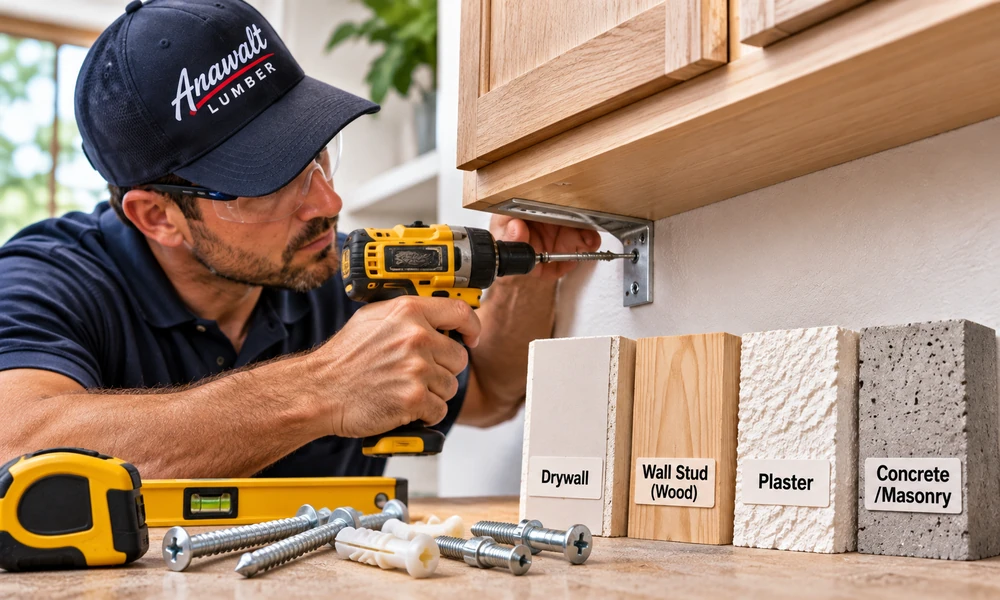
Cabinets and shelves can fail when the fasteners holding them to the wall are not matched to the wall material or the weight they need to support.
A screw that works well in solid wood may not hold the same way in drywall, plaster, block, or concrete. Understanding the wall and the load can help prevent loose shelves, damaged cabinets, and costly repairs.
The Wall Material Matters
The first step is knowing what the fastener is going into.
Drywall alone does not hold heavy loads well. For heavier cabinets or shelves, the fastener should usually reach a wall stud or use an anchor made for the weight.
Plaster walls can be harder to work with because the surface may crack if the wrong fastener is used.
Concrete and masonry need special screws or anchors that are made for hard materials.
The right fastener depends on the surface behind the cabinet or shelf.
Weight Is More Than the Item Itself
It is easy to think only about the weight of the shelf or cabinet.
But the total load also includes what you place on it. Books, dishes, tools, food, and other items can add a lot of weight.
A cabinet may feel secure when it is empty but become overloaded after it is filled.
Always think about the final working load, not just the weight during installation.
Stud Placement Makes a Difference
Wall studs provide a much stronger place to attach heavy items.
If possible, cabinets and large shelves should be fastened into studs at several points. A stud finder can help locate them.
Using only drywall anchors for a heavy wall cabinet may not provide enough support, especially over time.
Fastener Size and Type Matter
Fasteners that are too short, too thin, or made for the wrong material may pull out.
The screw should be long enough to reach solid material and strong enough for the load. Anchors should also be rated for the wall type and expected weight.
Proper spacing helps spread the load across more than one attachment point.
Check the Wall Before You Install
Before mounting anything heavy, inspect the wall, find studs, and estimate the total load.
At Anawalt Lumber, we can help you compare screws, anchors, fasteners, lumber, and other building materials for your project. We can help you choose hardware that matches the wall surface and load so your cabinets and shelves have stronger support.